

The Orthofeet Blog
Plantar Fasciitis


Josh White DPM / August 12, 2021
Hiking with Plantar Fasciitis: What You Need to Know
Hiking with Plantar Fasciitis: What You Need to Know
Read Post




-
7 Best Podiatrist-Recommended Footwear for Pregnancy
Medical information provided by Steven Gershman DPM / February 18, 2024Pregnancy brings about significant changes to a woman's body, including the feet. This is why it is important to have comfortable maternity shoes to support you throughout your pregnancy. Podiatrist Dr. Steven Gershman sheds light on the impact, stating, “Pregnancy affects the feet in several ways. There is swelling in the lower legs and feet from venous congestion. So the feet become temporarily larger all over, making it harder to fit shoes. In addition, the hormone relaxin is produced in higher amounts, which prepares the pelvis for childbirth by softening the ligaments and allowing them to stretch.” He adds that relaxin also affects the ligaments in the feet. “Ligaments hold the bones together. So, as the ligaments are softened and stretched by relaxin, the feet become larger in width and length, and this is usually permanent.” According to Dr. Gershman, most women gain about 1/2 size during pregnancy. “In addition, the feet are looser overall from the relaxin, leading to hypermobility and more motion, especially pronation. New or more extensive toe deformities can occur as a result, such as hammer and claw toes.” What kind of footwear is best for pregnancy? "Shoes should take into account the swelling by being larger and deeper,” notes Dr. Gershman. “The leather should be softer to allow stretching, but the heel counter should still be firm for stability.” He emphasizes the importance of firm heel counters in mitigating increased motion and pronation during pregnancy. He advises opting for shoes with a well-made insole or the ability to accommodate orthotics. In addition to knowing what a toe box is, Dr. Gershman recommends that a stretchable material across the top to the toes is also helpful. “The toe box should be wide and round to avoid rubbing on the toes, especially if deformed,” he adds. “Due to the increased size that usually occurs, it is wise to regularly recheck the length and width during the pregnancy. Be prepared to go to a longer and wider shoe at any time, as needed,” He states. “The new size will probably be permanent, at least until the next pregnancy.” Understanding wide-width shoe sizes can help you during your pregnancy. What are the best footwear options for maternity? To sum up Dr. Gershman’s recommendations, the best shoes for women expecting a baby should have the following features: Deeper to accommodate swelling Soft leather or stretch upper to allow swelling Firm heel counter for stability Wide and round to box to prevent toe rubbing, especially if deformed To help you find the right shoes, we’ve put together a list of carefully selected footwear that will carry you safely for the entire 9-month period. Best walking shoes for pregnancy: Kita [product-tile="/products/kita-hands-free-black-black"] Why you’ll love it Water repellent, breathable uppers adapt to the distinct contours of your feet Understanding what slip-resistant soles are as well as cushioned insoles can help you take a step towards improving gait and stability, while minimize minimizing discomfort. Specs Sizes: 5-12 Widths: Standard (B) - Extra Wide (2E) Upper materials: stretch knit Available colors: blue, gray, black/white, black/black, rose, white Slide your feet into cozy sneakers with stretch knit uppers that gently hug your unique shape—no pressure, no squeeze. As your feet swell during pregnancy, the water-repellent, breathable material adapts for a snug, ventilated fit that keeps them cool and dry. The Kita sneakers are designed with your wellbeing in mind. Beneath your feet, are professionally cushioned and ergonomic orthotic that realign your feet with your body's natural posture. Suddenly, the weight and strain of pregnancy feel lighter as foot pain and discomfort melt away. With trusty slip-resistant outsoles, you can navigate any surface with confidence, whether it's a stroll through the park or a quick errand run. No need to worry about sliding or falling. The best part? These women’s hands-free shoes eliminate the need to tie laces or bend over, thanks to a hidden spring mechanism in the heel that lets you slip them on effortlessly—a small detail that makes a huge difference during pregnancy. Feedback from users “Love at first wear. I purchased these to wear while pregnant when bending over got to be too difficult. I needed a shoe with a good sole and support and I wasn't convinced other hands-free brands could give my feet what they really needed. I have plantar fasciitis and heel pain issues even when NOT pregnant. Let me tell you. These shoes have been AMAZING. The backs never fold. I've had really good luck loosening the laces as my feet swell.” Emily S. Best dress shoes for pregnancy: Chelsea [product-tile="/products/chelsea-817-black"] Why you’ll love it Solid and firm sole for improved stability Just the right balance between style and functionality Specs Sizes: 5-12 Widths: Narrow (A) - Extra Wide (2E) Upper materials: soft leather Available colors: dark cherry, black The Chelsea shoes combine comfort, style, and functionality in one elegant design. With premium leather, a spacious toe box, and quality orthotic support, they provide cushioning, proper alignment, and lasting comfort—even as your feet swell during pregnancy. Inside, seamless, padded fabric lining prevents irritation, enhancing overall comfort with every step. Plus, the best slip-on shoes can offer effortless on and off functionality – perfect for the stages of pregnancy when the simplest task of putting on and taking off shoes becomes a challenge. For added personalization, two adjustable straps allow you to secure or loosen the fit, providing an extra layer of comfort and support as your feet change during this time. And with all these healthy, comfortable features, style still remains uncompromised. Whether you're dressing up or down, the Chelsea shoes effortlessly elevate your look while ensuring all-day comfort for every stage of your pregnancy journey. Feedback from users “This is such a comfortable shoe! I tried another cute shoe but my swollen foot just didn't fit. When I returned them I asked if there was a deeper shoe that could fit this swelling and the ‘advice assistant’ suggested Chelsea. This shoe is attractive and fits from the first [time] I slipped my foot into the shoe! I'll be back for more!” Carol Culhane Best work shoes for pregnancy: Coral [product-tile="/products/coral-no-tie-laces-black"] Why you’ll love it Flexible uppers that move with your feet Wide toe box and extra depth accommodate swollen toes and feet Specs Sizes: 5-12 Widths: Standard (B) - Extra Wide (2E) Upper materials: stretch knit Available colors: white, black, no-tie black, gray, sandy, blue, lavender, turquoise, wool gray When you’re expecting and your feet need extra care, Coral sneakers are the perfect choice. Their wide toe box, extra depth, and soft, stretchable uppers provide room to breathe and adapt to swelling, while breathable materials keep your feet cool and dry. The non-binding upper design and foam-padded interior mean you can walk pain-free, even during those long work hours. And the anatomical orthotic insoles? They keep your feet and lower limbs aligned, preventing discomfort from creeping up your body. And let's not forget about convenience. The no-tie bungee cord option makes slipping them on and off a breeze - perfect for when you're in a rush and especially during the later stages of the pregnancy. Plus, with their stability-focused design, including a rubber outsole and foam-padded areas, you can trust Coral sneakers to keep you steady on your feet, no matter what. Feedback from users “Improved swelling and improved discomfort! These shoes are comfortable and supportive. I am pregnant and have swelling and sore feet. After wearing these shoes for a week the swelling has significantly reduced and discomfort in my feet is gone. I feel like I can finally walk again! Love these shoes!” Julie Z. Best slippers for pregnancy: Capri [product-tile="/products/capri-camel"] Why you’ll love it Lace across the instep allows tightening or loosening fit Orthotic insoles and a fully-cushioned soles provide constant support Specs Sizes: 5-12 Widths: Standard (B) - Wide (D) Upper materials: leather Available colors: camel When you're expecting, your feet usually ache after a long day and that's exactly why you’ll love the Capri slippers. Crafted with expertise and care, these slippers are like a warm hug for your tired feet. Their moccasin style and enveloping design offer stability like no other, whether you're pottering around indoors or stepping out for some fresh air. And there’s much more than just stability, as these slippers are designed to pamper your feet. The orthotic insole cradles your arches, easing any pain and providing the support you need during pregnancy. And let's talk about that mild rocker bottom sole – it's like walking on clouds, making every step feel natural and effortless. Then, stepping inside, you find extra depth and wide forefoot that give your feet room to breathe, even as they swell during pregnancy. No more squeezing into tight slippers or compromising on socks - these slippers give your toes the space they need to stretch out and relax. And with a plush faux fur lining, every step feels like a treat for your feet. Feedback from users “So comfy! I bought the Capri slippers for my pregnant daughter who has hard tile floors. She absolutely loves them! The slippers have been a huge blessing for her. 🥰” Teresa Larson Best boots for pregnancy: Florence [product-tile="/products/florence-waterproof-taupe"] Why you’ll love it Waterproof uppers keep your feet dry in any weather condition Pliable leather provides a non-binding fit, even when feet are swollen Specs Sizes: 5-12 Widths: Standard (B) - Wide (D) Upper materials: leather Available colors: black, camel, taupe, brown (the only one that’s not slip-resistant) These boots are perfect for when you’re carrying and the chilly weather makes every step feel like a challenge. With their thoughtful design and innovative features, these boots are the right companion for your pregnancy journey. First and foremost, let's talk about support. These boots feature an anatomical arch support system that not only reduces pronation, but also guides your foot into proper alignment. This means you can walk with confidence, knowing that each step is supporting your foot health. Another feature that sets Florence boots apart is their accessibility and customized fit. With two hook and loop straps across the ankles, you can adjust them to fit your unique foot shape, even as it changes throughout the day. Plus, these straps make it easy to slip the boots on and off, which is a blessing as your pregnancy progresses and bending becomes more difficult. The rocker bottom sole adds a gentle spring to your step, reducing strain and keeping you comfortable, while the slip-resistant rubber sole offers stability on winter surfaces. Made from soft, non-binding leather, these waterproof boots have plenty of room for swelling and keep you stylish and supported throughout your maternity journey. Feedback from users “I call these my magic boots. When my boots arrived, I was suffering with swelling and pain in my feet, making it uncomfortable to walk. Nonetheless, I couldn't wait to try my new Florence boots on. I was absolutely shocked by how comfortable they were…I was walking so much better while wearing them all over the house. When I went outside in near zero temperatures, my feet remained comfortable and toasty warm. I've never had such a comfortable pair of boots in my life. I told my family these boots worked like magic on my sore feet. Now we called these my magic boots. This product has far exceeded my expectations, and I look forward to purchasing more Orthofeet products (shoes, slippers) so I don't have to wear my boots in the house. On a side note, these boots did not slip on snowy, icy areas.” Marilyn Sparks Best casual shoes for pregnancy: Stroll [product-tile="/products/stroll-blue"] Why you’ll love it So chic and fashionable, you’ll never tell they are just as healthy for your feet Each step is softened by the heel-to-toe cushioning sole, helping you carry the load Specs Sizes: 5-12 Widths: Standard (B) - Extra Wide (2E) Upper materials: suede Available colors: blue, black, taupe Wouldn't it be a dream to navigate your pregnancy journey with ease and comfort, every step feeling like a gentle stroll in the park? That's exactly what you'll get with Stroll shoes. Designed with a chic patterned suede leather exterior, Stroll shoes seamlessly blend classic sport styling with advanced therapeutic performance. But what sets them apart is their focus on providing optimal support for your feet during pregnancy. With each step, you'll feel the softness of the heel-to-toe cushioning sole, a blend of air and foam technology that cushions and supports your feet. The mild rocker feature enhances walking ease, infusing a spring-like quality to your stride, while the rubber outsole ensures advanced grip and stability on any surface. For those seeking this feature, we've selected our top picks of orthopedic shoes with a mild rocker bottom. At the core of Stroll shoes are orthotic insoles, offering premium arch support that enhances stability and aligns your foot, addressing concerns like overpronation. But perhaps the most important feature for pregnant women is the wide, round and high toe box, which creates ample space near the toes, and the extra depth design. This construction is a true blessing for those with swollen feet, ensuring that you can walk comfortably during every stage of your pregnancy. Feedback from users “Comfy! Very comfortable insoles and plenty of room in the toe box. Love the color since they go with my jeans!” Katherine Camacho Best sandals for pregnancy: Paloma [product-tile="/products/paloma-two-way-strap-camel"] Why you’ll love it Adjustable straps across the toes and instep allow you to customize fit Soles that stabilize each step and reduce impact while walking Specs Sizes: 5-12 Widths: Standard (B) - Wide (D) Upper materials: soft leather Available colors: camel, black During pregnancy, Paloma sandals are more than just a fashion statement - they're a true friend when you need comfort and support. With their deep heel cup, Paloma sandals are designed to minimize pressure on your entire foot, stabilizing each step and reducing impact as you walk. The advanced orthotic insoles provide unparalleled cushioning and support, ensuring you can walk comfortably, going into the last months of pregnancy, while providing you with pain relief. Crafted with foam padded leather uppers, these sandals not only prevent irritation and injuries, but also protect your sensitive feet. It's like slipping into a cozy cocoon for your feet, wherever you go. One of the more unique features of the Paloma sandals is their customizable fit. With two straps that run across the instep and toe area, you can effortlessly adjust the fit as your feet swell or unswell during this time. And with the strap across the instep opening on both sides, you have the freedom to choose the most comfortable on-off wear - a detail that makes a world of difference as your belly grows. Feedback from users “Palomas are the most comfortable shoes of any style I've ever worn. I have had dreadfully problematic feet ever since a twin pregnancy. All my ‘Mother of Twins’ books said to throw out all your shoes because they'll never fit you again after a twin pregnancy, and they were right. My feet went from an easy off-the-rack, any size 6-1/2B would fit, to a size 8 WW, with constant tendon pain. Finding any shoes that didn't hurt my feet since then has been a major, and usually futile, ordeal. But these Paloma sandals are incredible, the most comfortable shoes I have ever worn. It's hard to describe, they are almost like walking on the softest, springiest jello, yet at the same time have just the right amount of arch support that doesn't hurt my feet (which most ‘arch supports’ do), and allow me to be on my feet for many hours at a time with no pain…” Ann Taylor FAQ Should I buy bigger shoes for pregnancy? “Yes,” says Dr. Gershman. “Check the size regularly during the pregnancy. The feet will swell and get bigger due to relaxin. There should be a thumbs width from the longest toe to the end of the toe box. Check the toe box width by looking to see if any part of the forefoot is bulging out of the shoe, or if the foot is sticking out over the outsole so it is wider than the sole.” Dr. Gershman also gives a very simple rule of thumb: “If it feels tight, it probably is.” Are there any foot support for pregnancy? According to Dr. Gershman, the answer is “Yes”. He reiterates that “during pregnancy, the foot experiences increased laxity and pronation due to relaxin, so a good support is important.” Dr. Gershman further explains that the added weight is another force on the foot that needs to be taken into account. “It tends to pronate the foot more and stress the foot. So support is important in the form of quality insoles or possibly an orthotic.” Is it bad to walk with swollen feet while pregnant? “NO”, replies Dr. Gershman unequivocally. “Walking is good for the body as a whole and actually acts to help pump the venous blood back up the legs toward the heart. This can actually reduce swelling . It is important to use good quality and well fitting shoes to walk.” How can I unswell my feet during pregnancy? Dr. Gershman offers several ways to unswell the feet while pregnant. Elevate legs during sitting. The legs and feet should be higher than the waist. Choosing compression socks or stockings can benefit you during maternity.It is important to note that they should ride at least up the calf to just below the knees. Compression squeezes out the blood and fluid, and also reduces the risk of blood clots in the legs. Reduce salt intake. Consuming excessive salt can lead to fluid retention, exacerbating swelling in the feet and ankles. Limiting salt intake can help reduce fluid buildup and alleviate discomfort associated with swollen feet during pregnancy. Go on walks. As mentioned earlier, walking can help because it pumps blood back to the heart. Dr. Gershman notes it’s important to always check with your medical provider before starting a walking program.Read More -
Best Extra Wide Shoes for Swollen Feet
Medical information provided by Steven Gershman DPM / May 03, 2023All the shoes on our list have: a spacious and comfortable toe box (not including the open toe sandals, naturally) that provides extra space for swollen feet, ensuring that your toes are not cramped or restricted, reducing pressure and discomfort in the affected areas. added width and depth that provide a spacious fit for any foot size. a heel to toe cushioned outsole that provides excellent support and shock absorption, minimizing pressure on your feet and providing all day comfort. a contoured footbed with arch support that provides customized cushioning, as well as a cushioned heel for additional rear-foot support. an orthotic-friendly design that allows you to easily insert custom orthotics if needed, and further customize the fit and support provided by the shoes. Best extra wide dress shoes for swollen feet Women’s Emma Shop Emma These booties have a round and deep toe box that provides plenty of room for your toes to spread out. They also have a non-binding design that eliminates pressure points on your feet and accommodates swelling. Additionally, they have a 2-inch heel that adds height without putting extra pressure on your forefoot, and are made of soft, flexible leather that is padded with foam for a comfortable fit. Plus, they have an adjustable strap that allows you to customize the fit. Finally, the Emma booties have a medial side zipper that makes it easy to get in and out of them. Men’s Gramercy Shop Gramercy Finding dress shoes that fit well in wider widths without causing foot damage can be a challenge. Luckily, these oxford shoes boast a chic stitch detailing and a lace-up closure that exude both style and comfort and come in wide widths. The soft and non-binding leather upper material of these shoes offers a spacious fit that alleviates pressure on the feet, and the rubber outsole features an advanced grip, ensuring you remain stable on your feet. Best extra wide sandals for swollen feet Women’s Sahara Shop Sahara With no less than three adjustable straps across the instep, the Sahara are one of the best orthopedic sandals for women on the market and are a great choice if you have wide feet. The soft microfiber uppers have foam padding that protects the feet and improves comfort, and the uppers are soft and can stretch to accommodate swollen feet. Available in gray, bone and red. Men’s Gemini Shop Gemini Similar to the women’s Sahara sandals, the Gemini also has three straps, although in this case they are placed in different locations, from heel to toe. The sandal features two straps that cross the instep and open on both sides, offering a customizable fit. Additionally, the ability to fasten the sandals on either side provides an alternative option for individuals who have difficulty bending down to reach the external part of the shoe. The straps are made with stretch material, allowing them to conform to the shape of your foot. The third strap is placed at the back of the sandal, allowing you to also adjust the fit in the heel area. And finally, there is a strap across the toes that opens up completely for anyone with swollen toes or bone deformities. Best extra wide slippers for swollen feet Women’s Louise | Men’s Hudson Shop Louise Shop Hudson Your swollen feet can expect to feel exceptionally comfortable in these clog slippers. With the adjustable closure across the instep you can easily customize the fit, as well as secure it for improved stability. The soft and flexible uppers hug your feet and conform to their shape and size, and their breathable quality allows airflow and keeps your feet dry and odor free. They also have an antimicrobial lining that promotes foot health and prevents infections. Finally, the slippers’ durable soles and stylish design allow you to enjoy them even when you step out of the house. Best extra wide boots for swollen feet Women’s Dakota | Men’s Ridgewood Shop Dakota Shop Ridgewood If you’re looking for the best boots for men or women, the men’s Ridgewood and women’s Dakota could be the perfect fit, literally, as they are available in a wider than usual range of widths, which is exactly what you need if you have swollen feet. The high-quality leather uppers are water-sealed and keep your feet dry and allow moisture to escape. Additionally, with the rubber lug outsole, commonly found in sports and work shoes, you can enjoy superior traction and stability on any surface and terrain. Finally, although they have all the added orthopedic features and look just like regular boots, both boots actually feel surprisingly light on your feet. Wide Shoes For Swollen Feet Growing up and now as an adult, I always had trouble finding comfortable shoes. When I was young, I had no idea shoes had different widths and no shoes ever felt good. Later on, I found shoes with wide width labels and that changed everything. My comfort level improved dramatically. However, it wasn't until much later in the 1990's that I truly found extra comfortable shoes. What made the difference? SHAPE, what I call the 3rd dimension in shoe fit. This blog will explain this concept and why extra width and shape are critical to any large foot, and especially those with swelling or deformities. Edema causes swelling and can often swell the feet significantly. When feet swell, the entire foot can enlarge. I have seen cases in practice of toes that look like sausages from the swelling. The main area of swelling is usually the top of the foot first, then the width is next, followed by the toes. Thus, fitting shoes becomes an issue. What used to fit before the edema no longer fits and can become impossible to wear. The foot now requires a wider and deeper shoe with a rounder toe box. Dimensions of shoe sizing Shoe sizing generally only includes 2 of the 4 dimensions. It includes length and width. Some shoe companies still cling to 1 width (medium) fits all. Over the past few years, more companies have finally realized medium width doesn't fit most people, as our bodies have gotten bigger and so have our feet, including width. I have seen this in my practice as most of my patients now require at least a wide shoe (some need extra wide or more). Very few companies go beyond wide to extra wide, or extra extra wide (6E). Despite this, most companies don't do well beyond these two dimensions. 3rd dimension: shape A shoe is manufactured on a mold of a foot called the last. The last comes in all the sizes the shoe will be made in, including length and width numbers. The last is the shape of the shoe. Unfortunately, most lasts just go with the same basic shape as they widen and lengthen the shoe. In many cases, as the foot widens at the arch and ball of the foot, where the width is measured, there is also an enlargement of the forefoot and toes that requires a larger toe box. Thus, in many cases, a wide shoe or even extra wide shoe may not fit well as the toe box is set to fit a narrower foot. In effect, the shoe needs a rounder wider toe box, which is the shape dimension. The same size 10 (Wide) men’s shoe found in many companies never fit comfortably for me. When I switched to a specialty footwear brand I suddenly felt like I had new feet. WHY? The shape. The specialty shoes had a much rounder, boxier front or toe box. When I lined up several pairs of other brand shoes with the specialty shoes, I could clearly see the big difference in the shape. Most other shoes had a narrower pointier toe box. They all felt too tight. My patients are often amazed to see the difference in toe box shape from many shoes to the specialty shoes I wear. They never thought about the shape when purchasing shoes. 4th dimension: depth There is another aspect to shoe design and fit, and that is depth. I have many patients with toe deformities who come in with pain from toes rubbing up against the top of the toe box of their shoes. When I look at the height of the toe box of many shoes, it is quite low. My current pair measures 1 and 3/4 inches high at the toe box. That gives plenty of room for my toes to move and not rub. Many shoes I see in the office measure less than an inch high. There is barely room for the toes. Extra depth shoes are important. The extra depth is the entire shoe. The heel is deeper, the center of the foot and arch is deeper and, of course, the toe box is wider and higher. This accommodates larger, thicker feet and edema. Also, it is perfect for orthotic insoles giving them room and better stability. Roomier shoes tend to be more comfortable. Problems with swollen feet Now that shoe sizing, shape and depth have been covered, we can discuss edema. As the feet swell, the normal size a person wears will feel too tight. But aside from feeling too tight, other complications can arise. The skin will be irritated, potentially causing blisters that can become infected. Infections in feet with edema are dangerous and potentially limb threatening. Swollen feet don't heal well or quickly. Chronic ulcers or sores can develop. Deformities, such as bunions and bunionettes (little toe side bunions), rub in the shoe even more with swelling. Hammertoes or other toe deformities also swell and rub in the toe box of many shoes, causing blisters, ulcers or sores, painful corns and jamming of the toes, causing pain. Swollen feet tend to bulge out the sides of the normal shoe. The foot is wider so that the regular size can't contain the foot, and the foot pushes out over the sole becoming unstable. This can lead to falls and injuries. Another potential issue with swollen feet in poorly fitting shoes is nerve injury. The tight shoe compresses the very superficial nerves on the top of the foot, causing pain or even numbness. At the ball of the foot, between the metatarsals, the nerves going to the toes can be compressed, causing nerve pain, numbness and neuromas. These are thickened nerve coatings that compress the nerves, causing symptoms such as numb toes and pain. Shoes for swollen feet What to look for in shoes for swollen feet? Length: Measure and fit shoes when feet are most swollen, which is later in day. Start with proper length, which is a thumb’s width longer than the longest toe on the largest foot when standing. If your feet are different, go with the larger foot. Also, make sure you are wearing the socks you usually wear, since thicker or thinner socks alter the space in the shoe and make the fit tighter or looser. Width and depth: When fitting the shoe, again to the larger foot, make sure the foot isn’t bulging at the ball of the foot. If the ball on either side bulges out over the outsole, it is too narrow. The shoe should be comfortable and not feel like it is jammed into the shoe squeezing it. Many people think the heel has to be tight and worry that if it slips up or down a bit when walking, it is too wide. Generally, shoes that fit the wide ball of the foot may be loose at the heel. That is not a major issue, as slightly loose heels are OK. The heel doesn't have to feel welded into the shoe.Fit the rest of the foot and don't worry as much about the heel. Shape: As written above, the round shape of the toe box is superior for swollen feet and of course, for almost anyone looking for comfort. Upper material: Another feature to be looking for in severe cases of swollen or very wide, thick feet is shoes with stretchable material. I have used such shoes in practice. In many cases, these were the only shoes that would fit the patient. The knit material stretches and conforms to the contours of your feet and doesn't rub. They are particularly useful with deformed toes and other bony protrusions on the feet. Adjustability: Specialty shoes enable you to customize and adjust the fit to your particular foot shape. Straps or laces allow you to tighten or loosen the grip in several areas to create a pressure-free fit. A forefoot strap can accommodate bunions, hammertoes and swollen feet. A heel strap accommodates a wider foot or heel, and laces or a strap across the instep can accommodate swollen, thick, or high instep feet. Remember, as you age your foot changes. Even without edema, most feet stretch out over the years, becoming longer and wider. Then, of course, there are the deformities that can occur with age and diseases that change the shape of the feet. What fit once when younger, no longer fits. I have seen patients gain 1 to 2 whole sizes over the years in length and width. Every year you should check the size and fit of your shoes. If you have swelling, then that should be accommodated immediately. Most people require at least wide shoes as they age and many need extra wide if there are issues. Don't just go by number, test the shoes for fit and comfort. Shoes should be comfortable. Your feet and health depend on it.Read More -
Edema: Causes, Symptoms, and Treatment
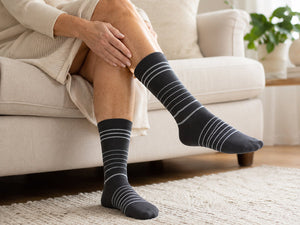
Medical information provided by Steven Gershman DPM / September 13, 2022What is edema? There are many causes and types of Edema, but they are all characterized by the buildup of extra fluid in the tissues of the body, causing swelling. Edema is commonly called "fluid retention" and is often seen in the extremities and as such it is known as "peripheral edema". Edema can also be seen in the face, lungs, and abdomen. This blog mainly will deal with peripheral edema in the lower extremities, i.e., the lower legs, ankles, and feet. Generally, edema in the peripheral tissue is categorized as either pitting or non-pitting. Pitting edema is diagnosed by pushing on the area of swelling and seeing if there is an indentation or pit in the tissue. It usually lasts for a few seconds. With non-pitting edema, which is more severe edema, the tissue is so firm that it doesn't indent when pushed on. It is like a water balloon filled fully. The fluid is body water or natural/isotonic saline, not blood. Edema causes In the legs, the veins have valves that operate as "check valves" to prevent blood from going down to the feet due to gravity. Heart-pumping action pushes blood through the arteries down to the feet. The blood needs to return to the heart for re-circulation through the veins. However, there is no true pump pushing the blood up the legs. Blood pressure through the system and the leg muscles contracting pushes the blood up the leg veins, while the valves prevent backflow down against gravity. Edema swelling is caused by incompetence of the valves, which allows blood to pool in the legs and feet. When blood stagnates or pools in an area, water leaches out of the blood into the surrounding tissue. Valve incompetence can occur due to the following reasons: As we age Standing in one place for many hours Sitting with the feet down on the floor for many hours Varicose veins, which in many cases are a genetic weakness in the valves Regardless of the cause, as the valves in the legs become incompetent, the blood pools and causes swelling which puts pressure on the veins dilating them and further hindering the valves from working efficiently leading to more swelling. It is a vicious cycle. Besides vein issues, edema can be caused by a variety of other problems that can affect both legs. Heart disease: is a major cause, specifically congestive heart failure or CHF. As the heart begins failing as a pump, fluid will stagnate in areas like the legs and lungs and cause swelling/edema. Also, there is less blood going to major organs like the kidneys causing fluid retention. Kidney disease: causes fluid retention and edema as the kidneys can't eliminate enough fluid. Liver disease: causes edema in the legs and abdomen especially if there is cirrhosis. Specific medications: calcium channel blockers and beta blockers can have peripheral edema as a side effect and is seen often in the ankles and lower legs. Sodium: salt in the diet is another culprit in edema. Salt causes fluid retention which manifests as edema. Alcohol: causes dilation of the veins which leads to edema. Susceptible people will have widespread vaso-dilation of the face, arms and legs when consuming alcohol. Eventually the veins stay dilated with chronic edema resulting. Another type of edema is lymphedema. It is often quite severe with large swollen legs or arms. Usually it is single limb. Lymphedema is often a genetic issue but can also be caused by cancer treatment and surgery. The lymph system which is part of the immune system is compromised causing swelling. Symptoms of edema Swelling is the big symptom of edema. In this blog, I will specifically discuss leg swelling, ankle swelling, and foot swelling. But other symptoms may also present themselves, such as the ones below. Discoloration to the skin: In the lower legs and ankles when the edema is caused by incompetent veins, changes occur to the skin. Chronic edema often leads to a brownish or reddish discoloration of the skin on the front of the shins and down to the ankles. This discoloration is due to hemosiderin deposits. Hemosiderin is a pigment from the iron/hemoglobin in the blood that leaks out of the blood into the tissue and skin. It permanently stains the skin. I tell my patients it is "rust deposits" from the iron in their blood. With edema, there is fluid pressure in the tissue that builds up forcing the iron into the tissue and skin especially as the blood stagnates or pools. Hemosiderin is a good indicator that the edema is affecting the skin and problems are going to occur if not dealt with and stasis dermatitis can then occur. Skin inflammation: Stasis dermatitis is an inflammation of the skin causing a rash that itches, burns, and can be painful. In severe cases, stasis dermatitis can cause breakdown of the skin resulting in open wounds or ulcers that are painful and can become infected with resulting in cellulitis. Skin thickening: Chronic edema can also cause thickening of the skin in the lower legs from the inflammation. This is permanent. The skin becomes thick, irregular, rough and almost elephant like in texture. It often drains fluid or weeps chronically and can blister. Neurological disorders : Another issue with edema is neurological. Edema causes pressure in an enclosed space where the nerves run down to the feet from the legs. The nerves become compressed causing pain and or numbness in the feet. It is similar to diabetic neuropathy. Swelling: Swelling of the feet from edema makes it difficult to wear shoes as the feet are simply too large to fit shoes. Many of my patients with edema come into the office wearing worn, stretched-out slippers or shoes way too large and stretched out. How to treat and prevent edema Treatment of Edema will depend on what triggers it. Some treatments are simple and can be done on your own at home while others will require medical intervention. Elevation of the feet and legs: As gravity is one of the main culprits with edema, elevation of the legs/feet is a mainstay in treatment. Sitting for long periods with the feet down on the floor can cause or add to edema. Many older patients sit a lot at home with their feet on the floor. I recommend a recliner to them. Basically, elevation of the legs higher than the waist, as in a recliner, works. With the feet higher than the waist, gravity works to pull the fluid back toward the heart. Elevating even higher where the feet are higher than the heart is better BUT often uncomfortable and not practical. Compression Stockings: This is the real treatment for edema. By putting pressure up the legs, the fluid is pushed back from the lower areas up to the upper legs and midsection where it is pumped back to the heart. Pressure needs to be graded so it is highest down near the ankles and gradually lessens going up the legs. Support hose up to the knee at least are the mainstay in treatment. There are several strengths of hose starting from mild compression over the counter type all the way up to prescription higher pressure stockings. Prescription stockings need to be custom fitted carefully by a trained professional. These need to be applied when first getting up in the morning before getting out of bed and worn until bedtime. People who stand a lot in one place at work and have the tendency toward edema or varicose veins should consider wearing support hose to reduce the chances of severe edema with its permanent damage. Compression Wraps: In severe cases of edema such as in stasis dermatitis, or when ulcers occur or with lymphedema it is often required to wrap the legs in heavy compressive dressings. This is done first by a medical professional and can be followed at home by a nurse or the patient. Often several layers of wrap are used, and it is cumbersome. However, in many cases this is the only way to control the fluid and the damage. Prevention is still the best treatment here as once the edema reaches this point it often becomes a chronic issue of wrapping the legs. Avoiding Salt: Reducing salt in the diet can help reduce fluid problems and edema. I have had patients with leg edema who ate pizza daily and swelled up. Reducing the pizza in the diet in those cases reduced the swelling. Limiting Alcohol: Reducing alcohol also makes a big difference. I have seen remarkable changes in the edema in patients who took my advice in this area. For the other issues causing edema, patients should work with their medical professional to best manage the condition. In many cases the edema will improve as the medical issue is stabilized. If medication side effects are causing edema, talk to your prescriber about it and how to manage the side effects. Shoes for Edema As mentioned earlier, edema can make it difficult to wear standard footwear due to swelling in the feet and ankles. The right shoes can help reduce pressure, accommodate swelling, and improve daily comfort and mobility. When choosing shoes for edema, look for the following features: Stretchable uppers: Materials that expand with your foot in stretchable shoes help accommodate size changes throughout the day and create a pressure-free fit. Adjustability: Straps, laces, or bungee closures allow you to customize the fit as swelling fluctuates. Wide widths: Standard shoes are often too narrow. Extra-wide options (up to 6E) prevent constriction and discomfort. Extra depth: More space inside the shoe reduces pressure on swollen feet. Wide toe box: A roomy, rounded wide toe box helps prevent bunions, friction, and hammertoes while allowing natural toe movement. Built-in orthotics: Proper arch support and orthotics improves alignment and can help offset gait changes caused by swelling. While slippers may feel more comfortable due to their flexibility, many lack the support and protection needed for safe movement. Poorly constructed slippers can increase the risk of falls and injury. Orthopedic footwear and orthotic insoles, like those from Orthofeet, are specifically designed for swollen feet, offering stretchable uppers, multiple adjustment options, extra depth, and built-in orthotic support—making them a reliable choice for managing edema comfortably. Socks for Edema Have you ever experienced rings around your ankles and legs after removing your socks? Wearing the right type of socks for edema can also be critical in managing symptoms. Edema socks are uniquely designed with a non-binding and non-constricting shape and yarns to eliminate pressure. Orthofeet also offers socks for swollen feet that are made of viscose rayon fabric and are super soft against the skin. Finally, edema as in all medical issues, is best managed early. If you start noticing swelling near your ankles or pitting skin or marks such as rings around the lower legs when you remove socks, it is time to start thinking of edema and how to control it. Many of the changes that can occur with edema later are permanent. So, prevention is so critical. When in doubt, talk to your medical provider about it. Step Forward with the Right Support: Why Orthofeet Matters Managing edema effectively means combining the right habits with the right support. While elevation, compression, and lifestyle changes help reduce fluid buildup, footwear plays a critical role in daily comfort and mobility. Orthofeet shoes are designed to accommodate swollen feet with stretchable materials, extra depth, and built-in orthotics, helping relieve pressure and support proper alignment. Choosing the right shoes can make a meaningful difference in reducing discomfort and helping you stay active while managing edema. FAQs Why does edema sometimes feel worse at the end of the day, even if you haven’t changed your routine? Edema happens due to gravity and prolonged pressure in the leg veins throughout the day. As you sit or stand, fluid gradually accumulates in the lower body parts, especially the ankles and legs. Over time, this leads to more fluid trapped in the body's tissues, making swelling more noticeable by evening. This pattern is especially common in people with early vein valve issues, even before severe edema develops. Can untreated edema lead to skin or tissue damage? Yes, chronic edema can cause long-term changes in the tissues in your body. Persistent fluid buildup increases pressure in the surrounding tissue, which can lead to skin thickening, discoloration from pigment deposits, and conditions like stasis dermatitis. In advanced cases, the skin may break down, increasing the risk of infection. That’s why early treatment of edema is critical to prevent irreversible damage. Are there subtle early signs that people often miss before noticeable swelling develops? Many people notice edema only after visible swelling, but early signs can appear first. These include tightness in shoes, sock marks or rings around the ankles, or a heavy sensation in the legs and around the calves. These symptoms indicate fluid beginning to accumulate—even before obvious swelling—making it a key point to start efforts to prevent edema. How does compression actually improve circulation in people with edema? Compression works by applying graduated pressure to the legs and ankles, helping the veins and muscle pump move blood back toward the heart more efficiently. This reduces the pressure that causes fluid to leak out of blood vessels into surrounding tissue. By improving circulation, compression is considered one of the best treatment options for managing ongoing edema and preventing progression.Read More
